
Trainings and Workshops
At KMEWO, we are committed to the ongoing empowerment of professionals and service users through tailored training and awareness workshops.
Continuous upskilling is vital for those working in the voluntary and statutory sectors to understand the complex nature of harmful practices and consequently to support women affected by domestic abuse and harmful practices.
Our training equips professionals with the knowledge and tools to identify, respond to, and prevent such issues effectively. Alongside this, we deliver workshops to raise awareness among Black and Minoritised women about their legal rights in the UK, the impact of domestic abuse and harmful practices, and how to access relevant support services. These sessions play a key role in building safer, more informed communities and ensuring women have the confidence and knowledge to make informed decisions about their lives.
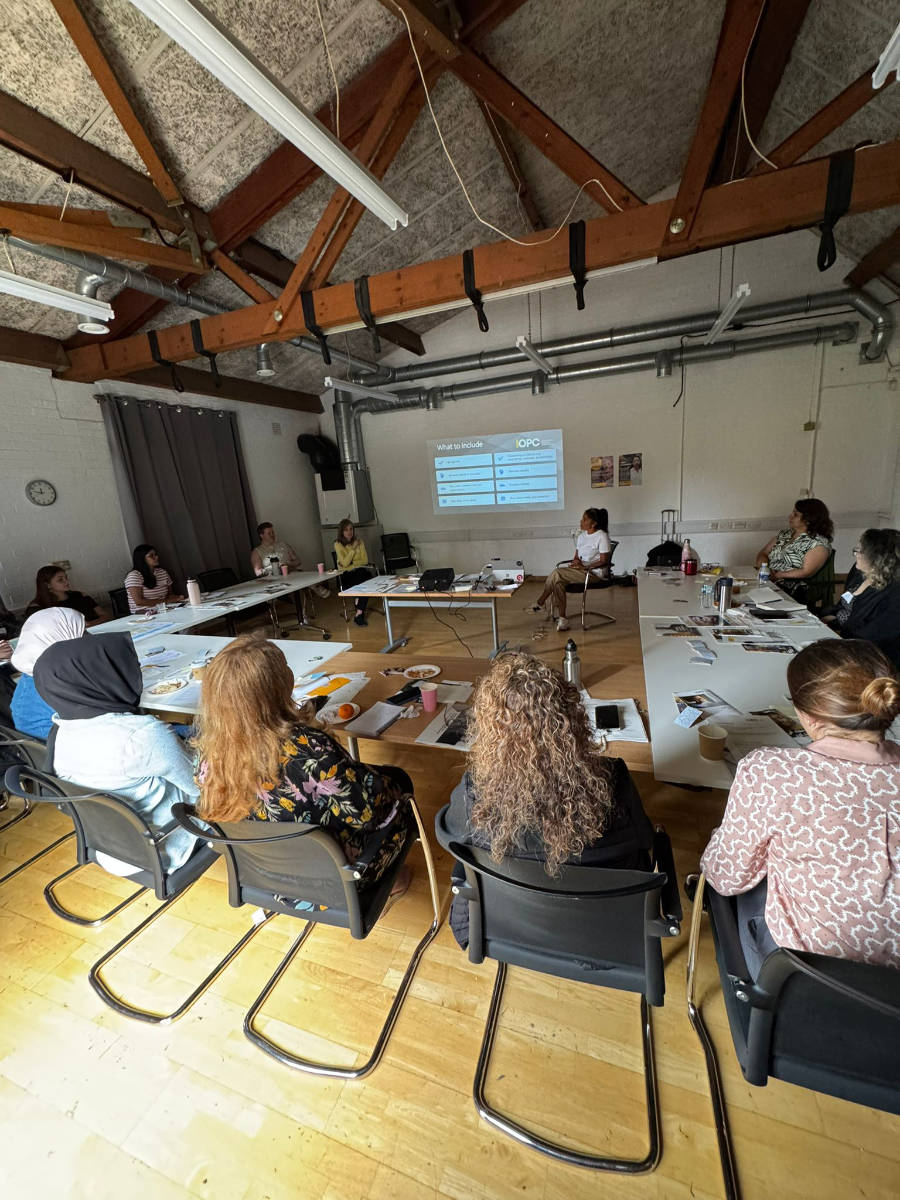
Harmful Practices Training for Professionals
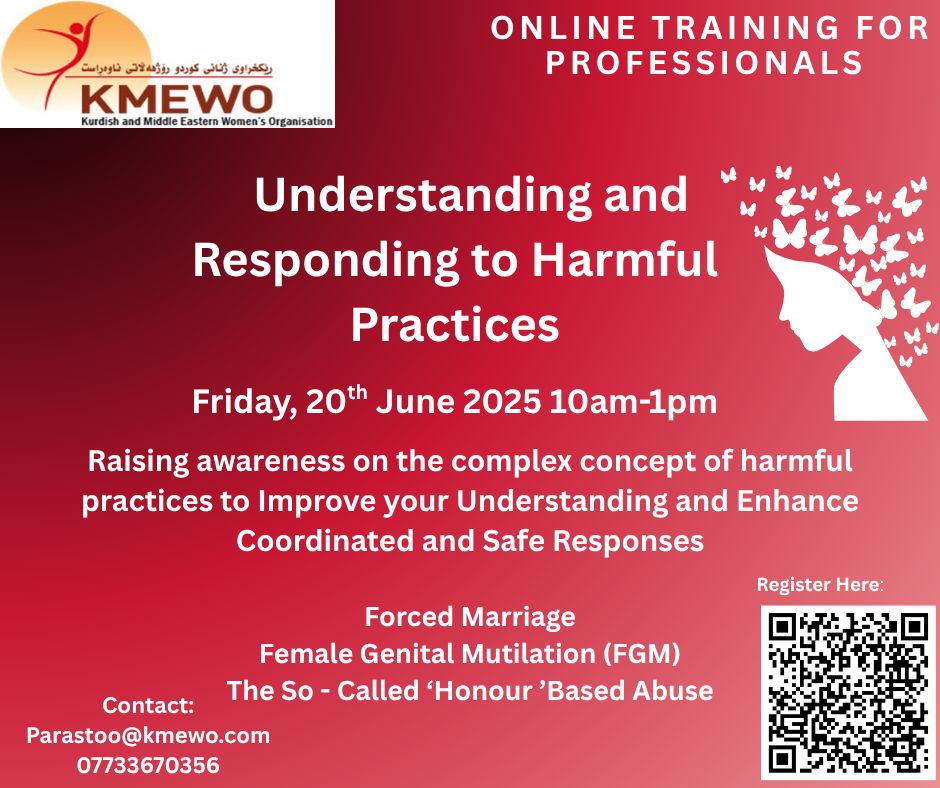
KMEWO has a long tradition in delivering Harmful Practices Training for Professionals in the voluntary and statutory sectors. The aim of the service is to raise awareness on the complex nature of harmful practices when intersected with Violence Against Women and Girls for more efficient identification and responses to potential incidents.
We Explore and Give Insights on:
- Forced Marriage
- Female Genital Mutilation
- The So-Called ‘Honour-Based Abuse’
- Modern Slavery
Feedback
Awareness-Raising Workshops for Survivors
KMEWO offers culturally sensitive awareness-raising workshops designed specifically for Black and minoritised women who have experienced or are at risk of domestic abuse and harmful practices, including Forced Marriage, Female Genital Mutilation (FGM), and Honour Based Abuse. Delivered by our skilled staff and trusted external partners, these workshops create a safe, supportive space where women can learn about their rights in the UK, understand the signs and impact of abuse, and access appropriate services. Our goal is to empower women with knowledge, reduce isolation, and support them in making informed choices for their safety and wellbeing.